Heavy metals are all around us. They can be found in old paint, contaminated soil, polluted water, some workplaces, certain foods, old plumbing, industrial areas, and other parts of everyday life. Some metals are useful to the human body in tiny amounts. Others, such as lead and mercury, can become harmful when exposure is high enough.
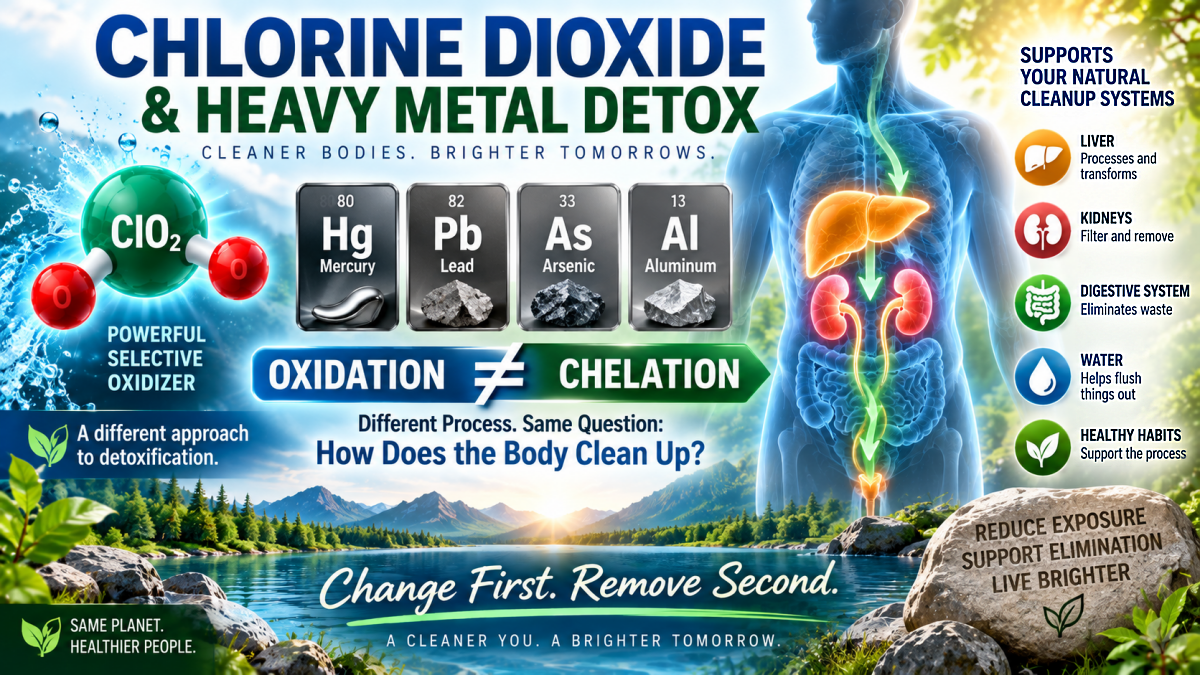
That is why many health-minded people are interested in reducing unnecessary exposure and helping the body’s natural cleanup systems do their job.
Among people who use chlorine dioxide for personal wellness, there is another interesting idea: Could chlorine dioxide also help the body deal with unwanted metals?
Many chlorine dioxide users believe it can. Let’s look at why.
First, What Is a Heavy Metal Detox?
The word detox can make something simple sound complicated. Your body is already cleaning itself every day.
The liver processes unwanted substances. The kidneys filter the blood. The digestive system carries waste out of the body. The lungs, skin, and other systems also participate in normal waste removal.
The goal of a detox program is usually to reduce exposure while supporting these natural processes.
When heavy metals are involved, however, things can become more complicated because some metals can remain in body tissues for a long time.
This is why conventional medicine sometimes uses special substances called chelating agents in cases of diagnosed heavy-metal poisoning.
Chlorine dioxide works differently.
Chlorine Dioxide Is an Oxidizer
This is one of the most important things to understand about chlorine dioxide.
Chlorine dioxide is an oxidizer.
That means it can accept electrons from certain substances and change their chemistry.
This isn’t merely something chlorine dioxide enthusiasts say. Oxidation is the reason chlorine dioxide has become useful in water treatment and other applications. The EPA describes chlorine dioxide as a chemical oxidant, and scientific reviews describe its selective reactions with microorganisms, organic compounds and some inorganic substances.
Think of oxidation as changing something chemically rather than wrapping around it and carrying it away.
That is an important difference.
Chlorine Dioxide Is Not a Traditional Chelator
People sometimes call chlorine dioxide a chelator. Technically, that probably isn’t the best description. Traditional chelators such as EDTA or DMSA bind directly to certain metals. The resulting complex can then be removed from the body.
Chlorine dioxide’s basic chemistry is different. It reacts through oxidation. So when chlorine dioxide believers talk about “heavy-metal detox,” a better description may be: oxidative support for detoxification rather than conventional chelation.
That small distinction helps explain why chlorine dioxide doesn’t behave like an ordinary chelation product.
We Already Use Oxidation to Deal With Metals in Water
Here’s where the idea becomes easier to picture. Water-treatment specialists have long used oxidation to change contaminants into forms that are easier to manage.
Chlorine dioxide is used in water treatment for purposes including iron and manganese oxidation.
Researchers have also investigated chlorine dioxide for oxidizing arsenic in contaminated water. Arsenic can exist in different chemical forms. One important water-treatment strategy is changing arsenic from one oxidation state into another that can be more easily removed by later treatment processes. Researchers have specifically studied chlorine dioxide for this purpose.
That doesn’t prove the same thing happens inside the human body. But it helps explain why chlorine dioxide users became interested in the subject in the first place.
Chlorine dioxide changes chemistry through oxidation. And changing chemistry can sometimes change what happens next.
What Chlorine Dioxide Users Report
This is where practical experience enters the conversation. People using chlorine dioxide wellness protocols sometimes report changes they describe as “detox.”
They may describe:
- clearer thinking
- more energy
- fewer headaches
- improved sense of wellbeing
- better digestion
- changes in skin
- temporary changes during their cleanup period
Some users believe these experiences result partly from reducing microorganisms, microbial waste, environmental contaminants, or accumulated substances that the body is trying to eliminate.
Heavy metals frequently appear in those discussions.
The important idea within this community is not necessarily that chlorine dioxide grabs a piece of mercury and carries it directly into the toilet.
The proposed picture is broader:
chlorine dioxide → oxidation → altered chemical environment → body’s normal detox systems → elimination
That’s considerably easier to understand.
Mercury
Mercury is probably one of the metals most commonly mentioned in detox conversations.
Possible exposure can come from several sources, depending upon the form of mercury involved.
Chlorine dioxide users report that they believe their wellness routines helped them deal with past mercury exposure. Rather than thinking of chlorine dioxide as a magnet that grabs mercury, they generally view chlorine dioxide as part of a larger oxidative cleanup process.
The body’s liver, kidneys, digestive system, and natural antioxidant systems would still have to do their jobs.
In other words: Chlorine dioxide isn’t the garbage truck.
It is thought of more as something that may help change the environment in which the cleanup takes place.
Lead
Lead is another metal people understandably want to avoid. Old paint, contaminated soil, some plumbing, and certain occupational exposures can all be sources.
The best heavy-metal strategy always begins with something wonderfully simple: Stop the exposure.
You don’t want to keep putting something into the body while simultaneously trying to get it out.
Once exposure has been identified and reduced, chlorine dioxide believers may include chlorine dioxide as one part of their broader cleanup program.
Again, the proposed role is oxidative rather than traditional chelation.
Arsenic Gives Us an Interesting Example
Arsenic is particularly interesting because chlorine dioxide has actually been studied for arsenic chemistry in water treatment.
Researchers have examined whether chlorine dioxide can oxidize arsenite, As(III), into arsenate, As(V). Changing the oxidation state can make arsenic easier for later water-treatment processes to remove.
Notice what chlorine dioxide isn’t doing. It isn’t magically making arsenic disappear. It is changing its chemistry. Then another process removes it.
That is a useful picture when thinking about the way chlorine dioxide enthusiasts approach detoxification:
Change first. Remove second.
Aluminum
Aluminum also comes up frequently in natural-health detox programs. People can encounter aluminum through food, water, occupational sources, and many everyday products.
Some chlorine dioxide users include aluminum among the substances they believe may become easier for the body to handle during a broader detoxification program.
This is another area where people sometimes combine chlorine dioxide with other wellness practices rather than expecting one product to accomplish everything.
Don’t Forget the Microbial Side
There is another possibility that makes this conversation interesting. What people call a “heavy-metal detox reaction” may not always involve metals alone.
Chlorine dioxide is widely used because of its antimicrobial properties. Its ability to inactivate microorganisms is well established in water treatment.
So someone using chlorine dioxide may believe several cleanup processes are happening at once:
- microbial cleanup
- changes in microbial waste
- oxidation of reactive compounds
- changes in the intestinal environment
- normal liver and kidney elimination
and possibly
- changes involving environmental contaminants
That makes the word detox much broader than simply removing mercury or lead.
Help the Body Finish the Job
One principle makes good sense, no matter which detox philosophy someone follows: The body still has to eliminate what it doesn’t need.
That means chlorine dioxide enthusiasts commonly pay attention to the basics as well.
- Drink adequate water.
- Eat nourishing foods.
- Maintain normal bowel movements.
- Get enough rest.
- Move the body.
- Reduce continuing exposure whenever possible.
- Support good nutrition.
These aren’t glamorous ideas. But detoxification isn’t only about what you put into the body. It’s also about keeping the body’s normal exits working.
Don’t Confuse Chlorine Dioxide With Chlorine
This is worth repeating because the names sound similar. Chlorine dioxide is not the same substance as household chlorine bleach. Chlorine dioxide has its own chemistry and its own uses.
In water, chlorine dioxide reacts and produces substances including chlorite and chlorate. That’s one reason concentration and proper preparation matter. More isn’t automatically better.
Heavy Metals Can Be Measured
Here’s something especially useful about this subject. Heavy-metal exposure doesn’t have to remain a guessing game. When someone seriously suspects lead, mercury, arsenic, or another toxic-metal exposure, appropriate testing can sometimes establish whether an unusual exposure actually exists.
That gives the chlorine dioxide community an interesting opportunity.
Instead of relying only on: “I felt much better after detoxing,” we can also ask: “What did the measurements show?”
That could make future observations much more useful.

A Simple Way to Think About It
Traditional chelation and chlorine dioxide shouldn’t be thought of as the same thing. A traditional chelator is more like a substance designed to grab onto a metal.
Chlorine dioxide is an oxidizer. Its specialty is changing chemistry.
That gives us a simple picture:
EXPOSURE
↓
REDUCE THE SOURCE
↓
OXIDATIVE CLEANUP
↓
SUPPORT THE BODY
↓
NORMAL ELIMINATION
For chlorine dioxide users, that is the heart of the heavy-metal detox idea.
Cleanup Is a Process
There probably isn’t one magic substance that handles everything the body encounters. That’s why many experienced natural-health practitioners think in terms of creating a healthier environment rather than chasing one toxin at a time.
- Reduce what shouldn’t be coming in.
- Give the body what it needs.
- Keep the normal elimination pathways moving.
- And allow time for cleanup.
Chlorine dioxide enthusiasts believe its unusual oxidative chemistry may give it a useful place in that process.
Perhaps the simplest way to say it is:
Chlorine dioxide doesn’t need to be a traditional chelator to be interesting in a detox program. Its specialty is oxidation, changing the chemical environment so the body’s own cleanup systems can do what they were designed to do.
And for people exploring heavy-metal detoxification, that makes chlorine dioxide one more interesting tool in the cleanup toolbox.
A Practical Note
Known or suspected heavy-metal poisoning—especially lead, mercury, or arsenic poisoning—is different from a general wellness “detox.” Significant exposure can cause permanent injury and can be measured and medically treated. Chlorine dioxide should not replace appropriate testing or treatment for confirmed poisoning.