Categories
Chlorine Dioxide

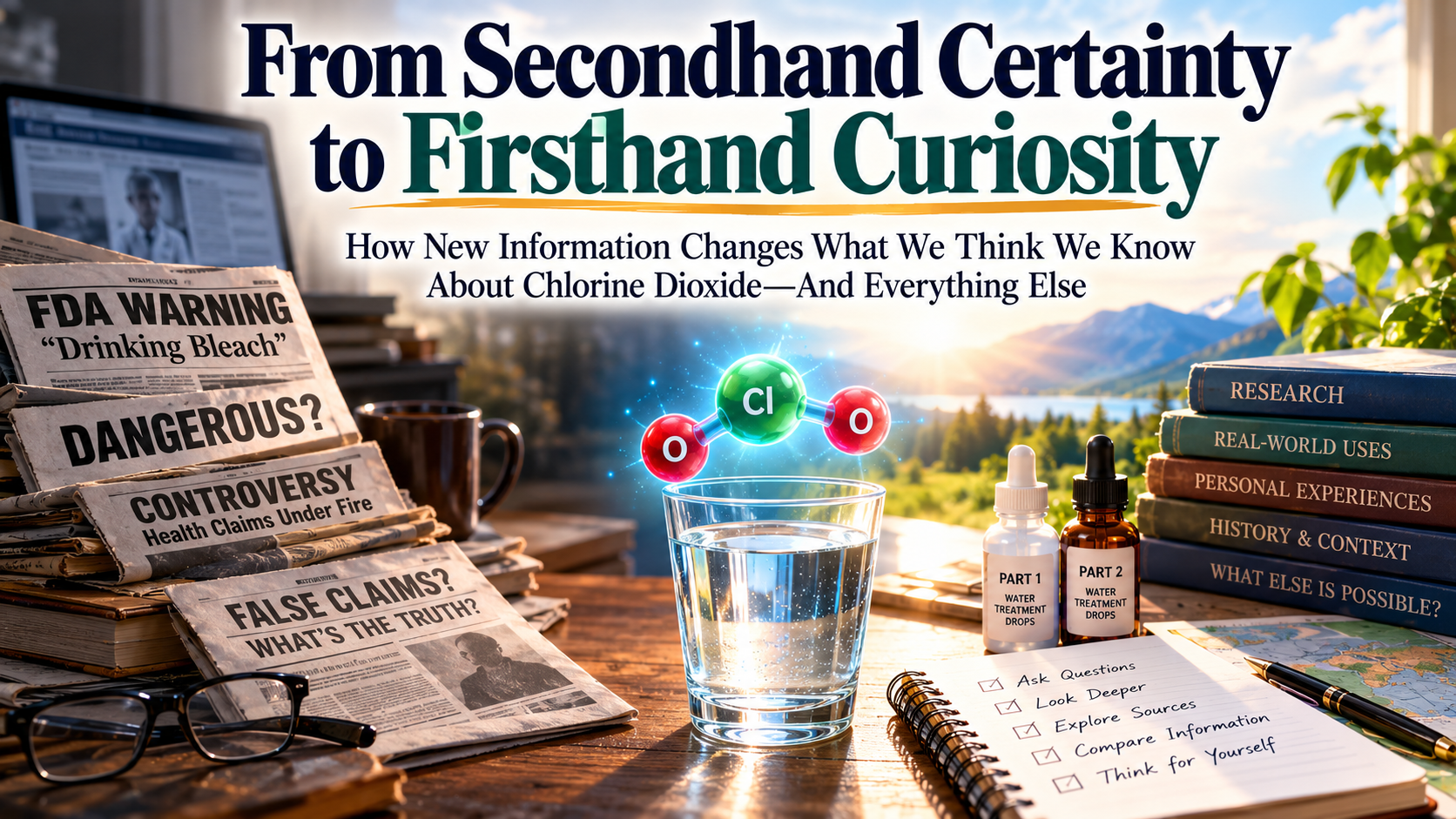
From Secondhand Certainty to Firsthand Curiosity

How New Information Changes What We Think We Know About Chlorine Dioxide—and Everything Else
A conversation about chlorine dioxide recently produced an unusually revealing observation. A man who had once been openly skeptical of the substance described how his opinion had changed after exploring it for himself. “I used to be a regurgitator,” he explained. “Then I became an experimenter.”

His choice of words was blunt, perhaps unnecessarily so. But the experience he was describing is remarkably familiar. He had accepted what he’d heard about chlorine dioxide, repeated those conclusions, and considered the subject settled.

Then he encountered information and experiences that challenged his previous understanding. Today, he describes himself as a believer.

The interesting part of his story isn’t necessarily the conclusion he reached. It’s the process that led him there.

Something he once considered settled became something worth reconsidering.

And that experience extends far beyond chlorine dioxide.

Most of What People Know Comes from Someone Else

Human beings depend on information passed from one person to another. Scientific discoveries, medical knowledge, historical accounts, technological advances, and everyday practical wisdom are all shared through generations of learning.

Nobody has the time or resources to independently verify everything they believe. Instead, people rely on trusted sources.

They learn from teachers, physicians, researchers, family members, books, news organizations, and personal relationships.

This is not a weakness. It’s one of the foundations of civilization. But there’s an important difference between relying on established knowledge and developing an unquestioned certainty about something that has never been personally examined.

Sometimes a familiar explanation becomes so widely repeated that people forget where it originated.

A statement becomes conventional wisdom. An opinion becomes an assumption. Eventually, the assumption becomes something people no longer question.

This phenomenon might be called secondhand certainty. It isn’t necessarily incorrect. It simply describes confidence that has been inherited rather than personally developed. And nearly everyone carries some of it.
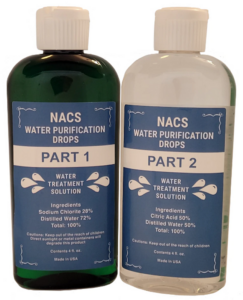
Chlorine Dioxide 2-Part Kit

Chlorine Dioxide: A Curious Example

Chlorine dioxide offers an interesting illustration of how secondhand certainty develops.

Ask different people what they know about chlorine dioxide, and the answers may vary dramatically.

Some recognize it as a disinfectant used in water treatment. Others associate it with industrial sanitation, food-processing applications, or municipal drinking-water systems. Still others immediately associate it with controversial health claims and the phrase “drinking bleach.”

Each person may be drawing from a different body of information. And each may believe they understand the subject.

Chlorine dioxide is a real chemical compound with established oxidizing and antimicrobial properties. It has recognized applications in controlled water treatment and disinfection. It has also been promoted for unconventional health purposes, leading to considerable controversy over its safety and the claims made about it.

These are different aspects of the same subject. Yet public discussions frequently compress them into a single judgment.

For some, chlorine dioxide represents an intriguing substance with applications worth understanding. For others, it is primarily associated with irresponsible medical claims.

The chemistry, however, does not change according to which narrative a person encounters first. And neither does the value of understanding the distinctions.

When Familiar Explanations Stop Being Enough

The man who described his transition from skeptic to believer was not necessarily persuaded by a better argument. His account suggests something more personal. He encountered experiences that caused him to question his previous assumptions.

What had once seemed obvious no longer seemed complete. This is a common turning point in human understanding.

Someone encounters information that doesn’t fit an existing belief.

At first, the information may be dismissed. Then curiosity begins to develop. Perhaps there is another explanation. Perhaps something important has been overlooked. Perhaps the original understanding was accurate in some respects but incomplete in others.

The person begins exploring. And sometimes, the exploration changes their perspective. The outcome isn’t always a reversal of belief. Sometimes it produces a more nuanced understanding.

The experience can be transformative because it changes the person’s relationship with certainty.

Instead of asking only whether new information agrees with an existing belief, they begin asking what the new information might reveal.

The Difference Between Knowing and Repeating

Repetition is one of the ways information becomes familiar. It is also one of the ways misinformation can spread.

A statement appears in an article. Someone repeats it in conversation. Another person shares it online. Soon, the statement appears in multiple places, creating the impression that it has been independently confirmed.

But repetition alone does not establish accuracy.

The same phenomenon can occur with accurate information, incomplete explanations, exaggerated claims, and mistaken assumptions.

Over time, the original context may disappear.

A careful qualification becomes a sweeping conclusion. A possibility becomes a certainty. Or an observation becomes an explanation that was never established.

This is not unique to controversial health subjects. It happens in business, education, politics, relationships, nutrition, and everyday life.

People routinely inherit beliefs about what works, what doesn’t, what’s possible, and what should be avoided. Most of those beliefs remain unexamined until something challenges them. And sometimes, the challenge begins with a surprisingly simple discovery.

Chlorine Dioxide Has More Than One Story

The public history of chlorine dioxide illustrates how competing narratives can shape understanding. Its established industrial and water-treatment applications are based on measurable chemical properties and defined operating conditions. Its alternative-health history developed differently.

Early advocates described personal experiences and reported improvements involving a wide range of health concerns. Some became convinced they had encountered something extraordinary. Others attempted to explain those experiences through theories that extended beyond established scientific knowledge. Enthusiasm sometimes outpaced understanding.

Regulatory agencies, meanwhile, issued warnings about consuming chlorine dioxide preparations promoted as treatments for disease. Those warnings addressed genuine health risks. But the resulting public controversy also encouraged a tendency to treat the subject as a contest between opposing camps.

Advocates defended their experiences. Critics emphasized unsupported claims and potential harm. Media coverage frequently favored the most dramatic elements of the dispute. And people encountering the subject for the first time often received a simplified version of a considerably more complicated history.

The result was an environment in which opinions could become entrenched before the underlying distinctions were fully understood.

This doesn’t mean that every perspective carries equal scientific weight. It means that understanding a controversial subject requires knowing which questions are being answered, and which are not.

Chlorine Dioxide for Humans

The Power of New Information

New information doesn’t always change the facts. Sometimes it changes what people notice.

Consider someone learning an unfamiliar word. After discovering its meaning, they suddenly begin noticing it in conversations, books, and advertisements. The word was probably present before. But now it has become recognizable.

A similar experience occurs when people encounter new information about a familiar subject.

  • Someone learns that a substance associated with one application has several others.
  • Someone discovers that a historical event was more complicated than the version they learned in school.
  • Someone meets a person whose experiences contradict a long-held stereotype.
  • Someone encounters research that adds detail to an explanation they previously considered complete.

The new information changes the way the subject is perceived.

It may not overturn everything previously understood. But it can reveal that the original explanation was only part of the story.

Once people discover that a familiar story has missing chapters, they may become interested in reading the rest.

When Science Adds Another Chapter

Scientific knowledge develops through continuing discovery.

Researchers refine explanations, identify previously unknown properties, and investigate new applications of familiar substances.

Sometimes promising ideas prove less useful than expected. Sometimes established technologies find applications that were not originally anticipated. And sometimes new findings challenge assumptions that had remained unquestioned for years.

Chlorine dioxide has a substantial history in disinfection and water treatment, and research continues into particular applications involving microorganisms, surfaces, and other controlled environments.

These developments contribute to a more detailed understanding of its chemical behavior and practical uses. They do not automatically validate unrelated medical claims. But they illustrate why scientific understanding should be considered an evolving body of knowledge rather than a collection of slogans.

A substance can have (1) established applications, (2) recognized hazards, (3) unanswered questions, and (4) emerging areas of investigation simultaneously. There is no contradiction in acknowledging all four.

The Freedom to Say, “I Didn’t Know That”

Modern public conversations often reward certainty. People are encouraged to take positions, defend them, and demonstrate confidence.

Changing one’s mind can be interpreted as inconsistency. Admitting uncertainty can feel uncomfortable. And acknowledging that someone else has introduced unfamiliar information may seem like surrendering an argument.

But learning doesn’t have to be an argument. Sometimes the most useful response is simply:

“I didn’t know that.”

Those four words leave room for discovery. They don’t require immediate agreement. They don’t demand that a person abandon everything previously understood. They simply acknowledge that something new has entered the conversation.

That willingness is especially valuable when discussing subjects surrounded by strong opinions.

A person can respect established knowledge while remaining open to additional information. They can listen to an unusual experience without immediately adopting its proposed explanation. And they can discover that a familiar belief needs refinement without treating the discovery as a personal defeat.

From Skeptic to Believer—or Something Else?

The man whose observation opened this discussion described becoming a chlorine dioxide believer after exploring the subject personally. His experience changed his perspective.

The broader lesson doesn’t depend on everyone reaching the same conclusion.

Another person might investigate chlorine dioxide and become more skeptical of certain claims. Someone else might discover legitimate applications they previously knew nothing about. A third might develop a more nuanced view that recognizes both the compound’s established properties and the limitations of particular claims.

Each person may emerge with a different understanding.

What matters is the willingness to examine information rather than simply repeat a position.

There is a difference between replacing one unquestioned belief with another and developing a deeper understanding of a subject.

The latter leaves room for continued learning. That is where firsthand curiosity becomes particularly valuable.

What Else Do People Think They Know?

The implications extend well beyond chlorine dioxide.

  • How many beliefs are inherited without much consideration?
  • How many familiar explanations have become accepted simply because they’ve been repeated for years?
  • How often does new information reveal that something previously considered straightforward is actually more complicated?

These questions need not encourage suspicion of everything. Reliable knowledge, scientific expertise, and trusted institutions remain essential.

Trust and curiosity are not opposites. People can respect expertise without assuming that every explanation is complete. They can appreciate personal experiences without treating them as universal conclusions. And they can recognize the value of established understanding while remaining interested in what may be discovered next.

The goal is not to question everything endlessly. It is to remain capable of learning something new.

From Secondhand Certainty to Firsthand Curiosity

A man who once repeated what he’d heard about chlorine dioxide eventually encountered experiences that changed his opinion. He now describes himself as a believer. Others may interpret the same subject differently. But his story illustrates something nearly universal.

Human understanding changes when new information enters the picture. Sometimes the change is dramatic. Sometimes it’s subtle. Sometimes an old belief is replaced. And sometimes it simply becomes more complete.

The most interesting moment may not be when someone announces a new conviction. It may be the quieter moment that comes before it. The moment when certainty gives way to curiosity.

When a familiar explanation no longer seems quite sufficient. When someone encounters something unexpected and responds: “I didn’t know that.”

Those words are not an admission of foolishness. They are an acknowledgment that learning is still possible. And perhaps that’s the most valuable lesson in the entire conversation.

Changing your mind doesn’t necessarily mean you were foolish before. Sometimes it simply means you know something today that you didn’t know yesterday.


Disclaimer: This article explores changing beliefs, personal experiences, and public perceptions surrounding chlorine dioxide. Chlorine dioxide has established uses in controlled disinfection and water treatment, but these applications do not establish its safety or effectiveness as a medical treatment. Ingesting chlorine dioxide preparations for health purposes can cause serious harm. Personal experiences and emerging research should be understood within their appropriate contexts.

 

Categories
Chlorine Dioxide

Chlorine Dioxide and Tinnitus: When All You Want Is Silence

Reported Relief, Multiple Causes, and the Search for Answers

Imagine waking up tomorrow morning to complete silence. Not the absence of traffic or conversation. Not a peaceful morning in the country. But the absence of a sound that has been following you for months, years, or even decades.

No ringing. No buzzing. No high-pitched whistle that seems to originate somewhere inside your head.

For someone who has never experienced persistent tinnitus, that might not sound particularly remarkable. For someone who has lived with it every waking moment, it could feel like getting their life back. And that helps explain why some people have become interested in chlorine dioxide, magnesium, and a variety of complementary approaches after finding little relief elsewhere.

Their interest may have very little to do with chemistry.

They just want the noise to stop.

What Is Tinnitus, Really?

Tinnitus is the perception of sound when there is no corresponding external sound source. People describe it in different ways.

Some hear a high-pitched ringing. Others experience buzzing, humming, hissing, clicking, roaring, or a sound resembling electrical interference.

It may affect one ear or both. It may come and go. It may change in pitch or intensity. And for some people, it never seems to stop.

One of the most important things to understand is that tinnitus is not a single disease.

It is a symptom that can arise from many different conditions and circumstances.

This distinction matters because two people reporting identical ringing may have entirely different underlying problems.

The Many Possible Causes of Tinnitus

Cause or contributing factor Possible relationship to tinnitus
Age-related hearing loss Changes in auditory input may contribute to persistent ringing
Noise exposure Loud music, machinery, firearms, or other intense sounds may damage hearing structures
Earwax blockage Can interfere with hearing and sometimes produce reversible tinnitus
Ear infections Inflammation or fluid may affect hearing and sound perception
Ménière’s disease May involve tinnitus, vertigo, and fluctuating hearing
Temporomandibular joint dysfunction (TMJ/TMD) Jaw-related sensory pathways can influence tinnitus
Neck and cervical conditions Certain forms of tinnitus change with head, jaw, or neck movements
Medication effects Some medications can cause or worsen tinnitus
Vascular conditions May produce rhythmic or pulse-synchronous tinnitus
Migraine Can involve temporary or recurring auditory symptoms
Stress and anxiety May intensify awareness of tinnitus and the distress associated with it
Sleep disturbances Poor sleep can increase tinnitus-related distress
Thyroid disorders May contribute to auditory symptoms in certain individuals
Anemia Sometimes associated with pulsatile tinnitus
Nutritional deficiencies Certain deficiencies may contribute to auditory or neurological symptoms
Auditory nerve or neurological conditions Less common causes may require specialized evaluation

This is not an exhaustive list. It does, however, illustrate why tinnitus can be so difficult to address.

A person experiencing ringing because of earwax blockage may have a very different path to relief than someone whose tinnitus followed years of occupational noise exposure.

Someone whose symptoms are associated with jaw dysfunction may respond differently from someone with an inner-ear disorder.

And someone whose tinnitus is amplified by sleeplessness and chronic stress may experience meaningful improvement when those contributing factors are addressed.

There is no reason to assume that every case will respond to the same intervention.

Chlorine Dioxide 2-Part Kit

Where Chlorine Dioxide Enters the Conversation

Chlorine dioxide (ClO₂) is best known for its antimicrobial properties and its established applications in controlled water treatment and sanitation.

Over the years, however, alternative-health authors and practitioners have discussed a much wider range of possible applications. Among those discussions are accounts involving tinnitus.

Chlorine Dioxide for Humans

Herb Roi Richards, author of Chlorine Dioxide for Humans: Recipes and Treatment, is among those who have helped bring chlorine dioxide-related health claims to interested readers.

In practitioner discussions and personal testimonials, some individuals report that their tinnitus diminished or disappeared after incorporating chlorine dioxide into their routines.

Others describe using chlorine dioxide alongside additional substances, including liquid magnesium. Still others describe experimenting with several complementary approaches simultaneously.

These accounts raise an interesting question.

If tinnitus has so many possible causes, what are we to make of reports that people with seemingly different circumstances experienced relief while using the same substance?

There are several possibilities.

  • Some people may have had reversible underlying conditions.
  • Some may have experienced improvements associated with other changes they made.
  • Some may have benefited from reduced stress, better sleep, or concurrent treatment.
  • And some experiences may warrant further investigation.

What we cannot determine from testimonials alone is whether chlorine dioxide caused the reported improvements. At present, reliable clinical evidence has not established chlorine dioxide as an effective treatment for tinnitus.

That distinction is important, but it need not prevent us from examining why people are interested in the subject.

Chlorine Dioxide Alone, with Magnesium, or Alongside Other Approaches

One interesting feature of alternative-health tinnitus accounts is that people don’t necessarily describe using the same combination of substances.

Their experiences can be grouped into three broad categories.

  1. Chlorine Dioxide Used Independently

Some individuals attribute improvements in tinnitus to chlorine dioxide without mentioning other complementary interventions.

These accounts are often the easiest to understand because the person identifies one primary change.

However, even when someone reports using only chlorine dioxide, other factors may have changed during the same period.

The underlying cause of tinnitus may also be unknown.

A temporal relationship—improvement occurring after an intervention—does not establish that the intervention produced it.

Nevertheless, the person’s reported experience can be documented accurately without claiming more than the account supports.

  1. Chlorine Dioxide Combined With Magnesium

Other individuals describe using chlorine dioxide alongside liquid magnesium.

Magnesium is involved in numerous physiological functions, including nerve signaling and muscle function.

Researchers have investigated magnesium in relation to hearing health and tinnitus, but clinical evidence does not establish magnesium supplementation as a reliable general treatment for tinnitus.

Its possible relevance may differ depending on a person’s nutritional status and underlying health.

When chlorine dioxide and magnesium are introduced together, there is no reliable way to determine from the testimonial alone which substance, if either, contributed to improvement.

Still, the person may describe a meaningful change in their symptoms.

That experience deserves to be represented as reported, rather than being converted into proof of a particular mechanism.

  1. The Multiple-Approach or “Kitchen Sink” Method

Some people describe an even broader collection of interventions.

Their accounts may mention chlorine dioxide, magnesium, apple cider vinegar, aloe vera, coconut oil, Lugol’s iodine, dietary changes, or other natural-health products.

The reasoning is often straightforward.

They have tried many things.

They are tired of waiting.

They are willing to explore several possibilities because they want relief.

This approach can make it impossible to identify what, if anything, produced an improvement.

It also introduces additional safety considerations.

Chlorine dioxide ingestion can cause serious adverse effects. Excess iodine can disrupt thyroid function, and supplements or other substances may interact with medications or underlying medical conditions.

For that reason, the existence of a reported combination should not be mistaken for a recommendation to reproduce it.

But the emotional motivation behind the decision is understandable. And that motivation deserves a closer look.

When Someone Has Simply Had Enough

Imagine living with a high-pitched sound that follows you everywhere.

You hear it while driving. You hear it while watching television. You hear it while trying to read. And when you finally turn off the lights and lie down to sleep, it seems louder than ever.

You try to ignore it. You try background noise. You consult specialists. You investigate supplements, dietary changes, sound therapy, and whatever else someone suggests might help.

Perhaps you experience temporary relief. Perhaps nothing changes.

Eventually, you reach a point where you don’t want another explanation. You want silence.

And when someone tells you about an unconventional approach that they believe helped them, you become interested. Not necessarily because you have evaluated every scientific claim. But because the possibility of relief matters to you.

Sometimes the person asking about chlorine dioxide isn’t looking for an argument about chlorine dioxide. They’re asking whether there’s any hope of escaping a sound that has taken over their life.

That is a very different conversation.

“I Don’t Care Which One Worked”

There is a familiar response among people who experiment with multiple approaches.

Someone asks which intervention produced the improvement. And the person replies: “I don’t know. I don’t care. I’m just glad it’s gone.”

From the individual’s perspective, that answer makes perfect sense. Their objective wasn’t necessarily to conduct an experiment. Their objective was to feel better.

They may have been prepared to accept uncertainty because the possibility of improvement mattered more than identifying a single cause.

This is an important distinction between personal decision-making and scientific research.

A researcher wants to determine which intervention produces which result. A person suffering from persistent tinnitus may simply want to regain their sleep, concentration, or peace of mind. Both perspectives have value.

The difficulty arises when a personal experience is presented as evidence that a particular substance will produce the same result for someone else.

The experience may be genuine. The conclusion may still be uncertain. And when potentially harmful substances are involved, that uncertainty deserves careful consideration.

What Does It Mean When Someone Says Their Tinnitus Is Gone?

This is another aspect of tinnitus testimonials that deserves attention. People may use similar language to describe different kinds of improvement.

  • Someone might say: “My tinnitus disappeared.”
  • Another person might say: “I finally got relief.”
  • And someone else might report: “I don’t even notice it anymore.”

These statements may represent different experiences.

Four Different Kinds of Improvement

  1. Complete disappearance

The person no longer perceives the ringing, buzzing, or other tinnitus sound.

  1. Reduced intensity

The sound remains present but becomes quieter or less frequent.

  1. Reduced awareness

The person continues to experience tinnitus but notices it less often or finds it easier to disregard.

  1. Improved quality of life

The tinnitus may remain, but the person sleeps better, concentrates more easily, experiences less distress, and resumes activities that previously felt difficult.

All four can represent meaningful improvements.

For someone who has been unable to sleep comfortably for years, the ability to rest through the night may be life-changing.

For someone who has struggled to concentrate, returning to ordinary daily activities may feel equally significant.

And for someone whose tinnitus truly disappears, the experience may be extraordinary.

The distinction matters because the phrase “my tinnitus is gone” doesn’t always tell us exactly what changed.

Understanding that difference can help us appreciate the reported benefit without assuming that every person experienced the same physiological outcome.

What Do We Know About Chlorine Dioxide and Tinnitus?

Chlorine dioxide has established antimicrobial activity in controlled environmental applications. Its ability to react with certain biological molecules helps explain its usefulness in water treatment and sanitation.

However, tinnitus is not generally understood as a single infectious condition.

Many cases involve changes in hearing, auditory processing, neural signaling, or other physiological systems.

There is currently no established clinical evidence showing that chlorine dioxide ingestion reliably reverses these changes or treats tinnitus. Nor is there an established therapeutic mechanism demonstrating that chlorine dioxide can safely correct the many different conditions associated with tinnitus.

This does not mean that every reported experience must be dismissed. It means that the reports and the scientific conclusions belong in different categories.

The reported experiences tell us what individuals believe happened.

Clinical research would be needed to determine whether chlorine dioxide itself produced those outcomes, under what circumstances, and with what risks.

Meanwhile, chlorine dioxide should not be used as an ear rinse or introduced into the ear canal, because inappropriate chemical exposure can cause injury.

When the Cause of Tinnitus Can Be Addressed

One encouraging aspect of tinnitus is that certain contributing conditions can be identified and treated.

For example,

  • Someone with impacted earwax may experience improvement after appropriate removal.
  • A person with an ear infection may benefit from treatment of the infection.
  • Someone with jaw-related tinnitus may benefit from addressing temporomandibular dysfunction.
  • Hearing aids can help some people whose tinnitus accompanies hearing loss.
  • Evidence-based approaches such as cognitive behavioral therapy can also reduce tinnitus-related distress and improve quality of life.

These interventions don’t all work by eliminating the underlying tinnitus signal. Some address a contributing condition. Others help the person experience less disruption from the sound.

The distinction is valuable because it broadens the possibilities for relief. It also means that new or changing tinnitus deserves appropriate evaluation, particularly when accompanied by sudden hearing loss, significant dizziness, one-sided symptoms, or a sound that pulses with the heartbeat.

A Different Kind of Conversation About Relief

Perhaps the most important lesson from tinnitus testimonials is not that every reported improvement proves a particular treatment works.

It’s that people experiencing persistent tinnitus may reach a point where the desire for relief overwhelms their interest in debating mechanisms.

  • They may be exhausted.
  • They may be discouraged.
  • They may feel that conventional approaches have offered little help.
  • And they may be willing to explore possibilities that they would previously have dismissed.

This is where compassion matters. A person doesn’t need to understand every aspect of auditory neuroscience to deserve relief. They don’t need to become a researcher to make decisions about their own health. And they don’t need to defend their frustration to someone who has never experienced the condition.

At the same time, desperation should not leave someone vulnerable to treatments that can cause additional injury or interfere with more appropriate care.

A helpful conversation can acknowledge the person’s suffering, discuss what is known and unknown about a proposed approach, and explore options that preserve their health and choices.

Where Do We Go From Here?

The reports involving chlorine dioxide and tinnitus present several questions worth exploring.

  • Are the individuals describing complete disappearance of tinnitus or a reduction in its intensity?
  • Were their symptoms associated with hearing loss, inflammation, medication effects, jaw dysfunction, or another condition?
  • Were they also using magnesium or other complementary products?
  • Did they receive other treatment during the same period?
  • And did the improvement continue?

These are reasonable questions for future investigation. But not everyone who experiences relief will want to answer them. Some people will simply be grateful that their symptoms improved and move on with their lives. That is understandable.

For researchers, carefully documented outcomes would help clarify what these experiences mean.

For individuals living with tinnitus, the immediate priority may remain much simpler. They want a quieter life.

The Sound Nobody Else Can Hear

Tinnitus can be an extraordinarily isolating experience. Other people may not hear the ringing. They may not understand why it interferes with sleep, concentration, relationships, or ordinary enjoyment. They may assume it is merely an annoyance.

But for someone who has lived with persistent tinnitus, the experience can become a defining part of everyday life.

That helps explain the interest in chlorine dioxide and other complementary approaches, particularly among people who feel they have exhausted their options.

Some individuals report meaningful improvement while using chlorine dioxide. Others describe improvement while combining it with magnesium or several additional interventions.

Those experiences can be acknowledged without assuming that chlorine dioxide caused the changes or that the same approach would be safe or effective for someone else.

And perhaps that is where a more compassionate conversation begins.

  • We can take people’s reports seriously.
  • We can recognize how desperately they want relief.
  • We can continue investigating unanswered questions.
  • And we can help people pursue appropriate options without turning their suffering into an argument.

Because when someone has spent years listening to a sound nobody else can hear, the possibility of silence can become extraordinarily precious.

Sometimes all they want is one quiet moment.

And that is a desire worth understanding.


Disclaimer: This article discusses reported experiences involving chlorine dioxide, magnesium, and other complementary approaches to tinnitus. These reports do not establish that chlorine dioxide safely or effectively treats tinnitus. Chlorine dioxide ingestion can cause serious harm, and it should not be introduced into the ear. Persistent, new, or changing tinnitus should be evaluated by an appropriately qualified healthcare professional.


Categories
Chlorine Dioxide

Chlorine Dioxide and the Gut-Liver Axis: Could One Upstream Connection Help Explain Very Different Reports About Liver Health?

Sometimes the most interesting question begins with two stories that don’t seem to belong together. I was present when Herb Roi Richards spoke with an individual who said he had “cured himself” of hepatitis B using chlorine dioxide. Those were his words, and they represent his personal account, not a conclusion established by clinical research.

More recently, I heard another person describe something quite different. He said that after using chlorine dioxide orally, his previously diagnosed fatty liver had returned to normal.

Then I went back to Herb’s work. Herb also discusses chlorine dioxide in connection with liver cancer. Cirrhosis doesn’t appear to receive the same attention.

At first glance, hepatitis B, fatty liver, cirrhosis, and liver cancer look like four very different subjects. They are. But they also share something fascinating.

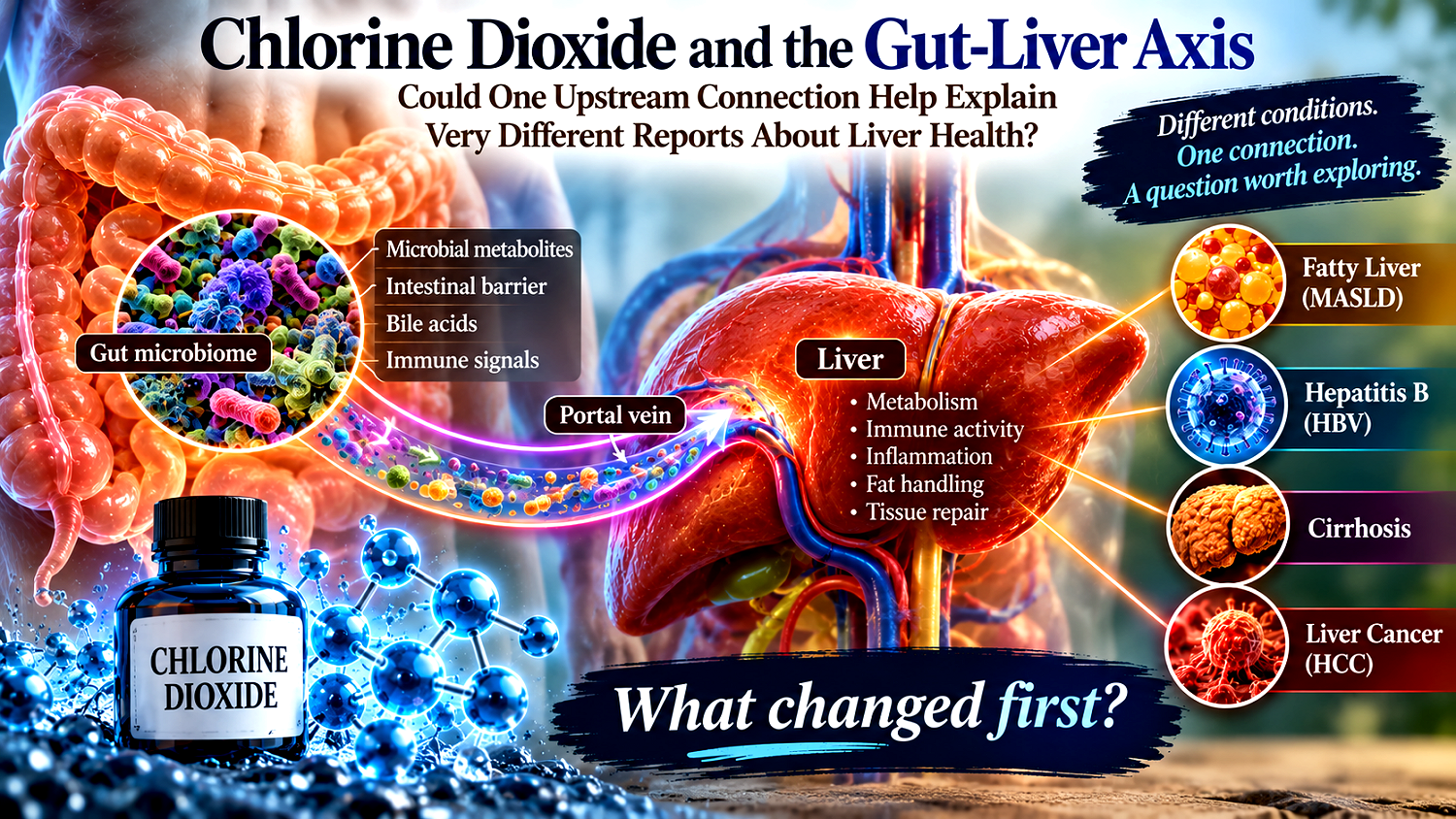
The liver is directly downstream from the gut. And that connection, known as the gut-liver axis, has become an important area of modern medical research.

Could it provide a clue for understanding some of these otherwise puzzling chlorine-dioxide reports? We don’t know. But there is enough happening in contemporary liver research to make the question worth exploring.

Your Liver Is Listening to Your Gut All Day Long

The gut-liver connection isn’t merely a clever metaphor. It’s plumbing. Blood leaving much of the gastrointestinal tract flows through the portal vein directly to the liver. Approximately 75% of the liver’s blood supply comes through this route.

That makes the liver one of the first major organs exposed to nutrients and microbial metabolites absorbed from the intestine. Communication also runs in the opposite direction: the liver sends bile acids and other substances back into the intestine, where they interact with intestinal microbes. PubMed Central (PMC)

That’s the gut-liver axis.

At its simplest:

GUT
↓
microbiome
↓
intestinal barrier
↓
microbial products and metabolites
↓
PORTAL VEIN
↓
LIVER

And the liver communicates back through bile acids, immune factors, and other signals. It’s a conversation taking place continuously.

The Gut Isn’t Sending Only Bacteria

This is where the subject gets considerably more sophisticated. When researchers talk about the microbiome affecting the liver, they aren’t necessarily saying bacteria themselves migrate from the intestine and attack the liver.

The intestinal ecosystem produces an enormous collection of biologically active substances. These include short-chain fatty acids, bile-acid derivatives, and other metabolites. Under unhealthy circumstances, increased intestinal permeability may also increase hepatic exposure to microbial components such as lipopolysaccharide.

Those signals can influence: inflammation, immune activity, insulin sensitivity, fat metabolism, bile-acid metabolism, and potentially fibrosis.

Recent MASLD research specifically identifies intestinal-barrier integrity, microbial metabolites, and gut-derived products as important components of the gut-liver relationship. PubMed

So, when something changes substantially in the intestinal environment, it isn’t unreasonable to ask whether the liver notices. It almost certainly does. The harder question is what changed and whether the change helped or hurt.

Fatty Liver: Probably Our Easiest Place to See the Connection

Fatty liver disease is now commonly described using the term metabolic dysfunction-associated steatotic liver disease, or MASLD. It isn’t simply caused by the microbiome.

Body weight, insulin resistance, diet, genetics, physical activity, diabetes, and other metabolic factors can all play important roles. But gut-liver research has added another dimension.

Recent reviews describe the gut microbiome as an important disease modifier in MASLD, with microbial metabolites, intestinal-barrier dysfunction, immune activation, and hepatic metabolism all interacting. PubMed

That makes the report I recently heard interesting.

Someone says: “I had fatty liver. I used chlorine dioxide. Later my liver was normal.” That doesn’t establish that chlorine dioxide reversed the fatty liver.

A person could simultaneously lose weight, improve insulin sensitivity, change diet, exercise more, reduce alcohol consumption, or experience any number of other changes. But unlike some subjective health reports, fatty liver gives researchers plenty to measure.

We can look at:

  • Liver imaging.
  • Liver fat.
  • ALT and AST.
  • Fibrosis measurements.
  • Blood glucose
  • HbA1c
  • Triglycerides
  • .Weight
  • Waist circumference.
  • And increasingly, we can simultaneously examine the person’s intestinal microbiome and microbial metabolites.

That presents an intriguing possibility.

What if we stopped asking only whether the liver improved and started asking what changed before it improved?

That’s a much better experiment.

Hepatitis B: A Very Different Liver Problem

Hepatitis B requires a different discussion. HBV is a virus that infects liver cells. It would therefore be inappropriate to take an anecdote about someone using chlorine dioxide and conclude: chlorine dioxide fixed his gut, therefore his hepatitis B disappeared.

First, we’d need to establish what “cured” actually meant.

  • Did his ALT normalize?
  • Did HBV DNA become undetectable?
  • Did hepatitis B surface antigen – HbsAg – disappear?
  • Did he achieve what’s called a functional cure?

Those aren’t interchangeable outcomes.

But here’s where our investigation took an unexpected turn.

Researchers Are Already Studying the Gut in Hepatitis B

A 2025 human study examined the intestinal microbiomes of people with chronic hepatitis B, including patients who achieved functional cure.

Researchers found microbial differences associated with functional cure and went further, examining short-chain fatty acids produced by identified bacteria in an HBV laboratory model. PubMed

That doesn’t mean gut bacteria cure hepatitis B. But it tells us researchers are seriously investigating whether intestinal microbial ecology influences the host-virus relationship.

Then things become even more interesting.

Someone Already Tried Changing the Microbiome

A small pilot study investigated fecal microbiota transplantation – FMT – in people with chronic hepatitis B who remained HBeAg-positive despite more than a year of antiviral treatment.

Twelve participants completed six FMT cycles while continuing antiviral therapy; another 15 patients continued antiviral therapy as controls.

The investigators reported changes including HBeAg loss in some FMT recipients, while emphasizing the preliminary nature of the work. PubMed

That’s a tiny exploratory study. It certainly doesn’t establish FMT as a hepatitis-B cure, and a 2026 review describes FMT in chronic HBV as exploratory and, if useful, potentially adjunctive to antiviral therapy. PubMed

But for our investigation it establishes an important principle: Researchers have deliberately manipulated the intestinal microbiome to see whether something changes in a viral disease of the liver.

That’s quite a long way from saying the gut has nothing to do with hepatitis B.

Cirrhosis May Be Even More Interesting

Cirrhosis is another completely different situation. Cirrhosis involves significant structural scarring of the liver after prolonged injury. Changing intestinal bacteria doesn’t magically erase scar tissue. But cirrhosis and the intestinal ecosystem can become caught in an unfortunate feedback loop.

Liver disease can alter bile acids, immunity and intestinal conditions. The intestinal barrier can deteriorate. Microbial products can reach portal circulation more readily. Inflammation increases. Liver function deteriorates further. And the cycle continues.

Modern reviews now describe dysbiosis, abnormal immune regulation, metabolic changes, and gut-barrier dysfunction as important features across chronic liver diseases, including cirrhosis. PubMed

Here we can go beyond association.

Scientists Have Actually Manipulated the Gut in People With Cirrhosis

A systematic review and meta-analysis examined 21 randomized studies involving 1,699 people with cirrhosis receiving microbiome-targeted therapies.

Across the studies, these interventions were associated with reductions in hepatic encephalopathy risk, ammonia, endotoxin, and AST, along with a modest improvement in MELD scores. Not every measure of liver function improved. PubMed

That’s important. Changing the intestinal environment can produce measurable downstream changes in people with serious liver disease.

FMT has also been tested experimentally in cirrhosis.

An early randomized clinical trial involving people with cirrhosis and recurrent hepatic encephalopathy found fewer serious adverse events and further encephalopathy episodes in the FMT group, along with improved cognition and measurable microbiome changes. It was a small study and doesn’t establish FMT as routine cirrhosis treatment. PubMed

Subsequent trials have continued investigating the approach. PubMed

Once again: Change something upstream in the gut. Something downstream changes.

That doesn’t tell us anything yet about chlorine dioxide. But it tells us something extremely important about the highway we’re investigating.

Then We Arrive at Liver Cancer

Herb Roi Richards includes liver cancer among conditions for which he discusses chlorine dioxide. That is Herb’s position and belongs in the historical and practitioner record surrounding his work.

It is not established clinical evidence that chlorine dioxide treats liver cancer. Nevertheless, our gut-liver investigation doesn’t disappear when cancer enters the picture. Quite the opposite.

Hepatocellular carcinoma, or HCC, is the most common form of primary liver cancer, and the gut-liver axis is now an active area of HCC research.

Researchers are investigating how dysbiosis, microbial translocation, bile acids, bacterial metabolites, chronic inflammation, and immune signaling may influence the environment in which liver cancer develops and progresses. PubMed

A very recent 2026 review describes the progression from MASLD through inflammation, fibrosis, and cirrhosis to MASLD-associated HCC while examining how microbiome-related metabolic and immune pathways may participate along the way. PubMed

That’s fascinating. But there’s a distinction we should not lose.

Helping create an environment in which cancer is more or less likely to develop is not the same as eliminating an established tumor.

Similarly, changing the tumor’s immune or metabolic environment isn’t synonymous with curing cancer.

So Herb’s liver-cancer reports should remain exactly what they are: observations and claims worthy of investigation, not proof of treatment efficacy.

Four Diseases That Suddenly Don’t Look Quite So Unrelated

Now stand back and look at what we’ve assembled.

Fatty liver. Hepatitis B. Cirrhosis. Liver cancer.

Different diseases. Different causes. Different treatments. Different outcomes. But each intersects with the same biological highway.

GUT

↓
microbial ecosystem
↓
intestinal barrier
↓
microbial metabolites • bile acids • immune signals
↓
PORTAL CIRCULATION
↓

LIVER

↓
metabolism • immunity • inflammation • tissue environment

From there, completely different downstream problems can emerge depending upon the person.

That’s considerably more interesting than trying to prove four unrelated chlorine-dioxide claims.

Where Does Chlorine Dioxide Fit?

Here’s where we have to leave some question marks on the page. Chlorine dioxide is a reactive oxidant with established antimicrobial chemistry.

That makes this hypothetical pathway tempting:

ORAL CHLORINE DIOXIDE
↓
changes microorganisms in the gut
↓
improves microbiome
↓
improves gut-liver signaling
↓
liver improves

It’s wonderfully tidy. Unfortunately, we don’t presently have evidence establishing that sequence.

In particular: Antimicrobial does not automatically mean microbiome-improving.

The intestinal microbiome isn’t simply a collection of bad organisms waiting to be disinfected. It is an ecosystem.

Removing or suppressing organisms can produce beneficial effects, harmful effects, or effects we don’t yet understand. And chlorine dioxide is reactive enough that assuming exactly what happens after oral exposure would get ahead of the evidence.

So, the scientifically useful version needs a very large question mark:

chlorine dioxide exposure
↓

?

↓
change in intestinal microbial or chemical environment?
↓
change in barrier function, metabolites, bile acids or immune signaling?
↓
portal circulation
↓
change in hepatic environment?
↓
measurable clinical outcome?

Now we have a hypothesis.

Maybe We Shouldn’t Assume the Microbiome Is the Only Domino

There’s another trap worth avoiding. Suppose future research really did find measurable liver changes following chlorine dioxide exposure. That still wouldn’t automatically prove: “It was the microbiome.”

Something else might have changed first.

  • Microbial metabolism.
  • Particular metabolites.
  • Gut-barrier permeability.
  • Bile-acid signaling.
  • Immune signaling.
  • Oxidation-reduction chemistry.
  • Dietary behavior occurring simultaneously.
  • Or something we haven’t considered.

That’s why our question needs to remain broader than: “Which bacteria did chlorine dioxide kill?”

The better question is: What Changed First?

And fortunately, modern science has tools Wayne Rowland, Herb and other early experimenters simply didn’t have readily available.

We can measure microbial populations. Metagenomics. Metabolomics. Short-chain fatty acids. Bile acids. Inflammatory markers. Intestinal-barrier markers. Liver enzymes. Fibrosis. Liver fat. Viral load. Viral antigens. Tumor characteristics.

We don’t have to guess nearly as much anymore.

The Study

Suppose a group of researchers recruited people already intending to use chlorine dioxide and documented them prospectively rather than reconstructing stories afterward.

Before exposure, researchers could establish: stool microbiome + microbial metabolites + bile-acid profile + intestinal-barrier markers + inflammatory markers alongside disease-specific measurements.

For fatty liver: MRI-PDFF or other validated imaging + liver enzymes + fibrosis measurements + metabolic markers

For hepatitis B: HBV DNA + HBsAg + HBeAg/anti-HBe where applicable + ALT and other appropriate clinical markers

For cirrhosis: MELD-related measurements + ammonia + clinical events + fibrosis/liver-function assessments

Cancer would require an entirely different and much more carefully controlled oncological study.

Then repeat the measurements over time. Now suppose liver markers improve.

Interesting. But suppose something even more intriguing happens: a reproducible intestinal or metabolic change consistently occurs first.

Now we’ve discovered something considerably more useful than another testimonial. We’ve discovered a domino. And if nothing meaningful changes upstream despite changes in liver measurements? Then the gut-liver hypothesis becomes weaker, and we go looking elsewhere.

That’s how an observation becomes a testable idea.

FMT Gives Us an Important Clue

There’s another reason I’m increasingly fascinated by this approach. We’ve encountered fecal microbiota transplantation repeatedly while investigating apparently unrelated conditions. Not because FMT proves anything about chlorine dioxide. It doesn’t.

FMT is useful to our thinking because it provides an independent experiment: What happens when researchers deliberately change the intestinal ecosystem?

In chronic hepatitis B, researchers have tried it experimentally. PubMed

In cirrhosis with recurrent hepatic encephalopathy, randomized human studies have found measurable clinical effects. PubMed

In MASLD, microbiome-targeted interventions remain an active area of investigation, although results are heterogeneous and a 2026 review notes that FMT has not reliably improved liver fat or insulin resistance in unselected populations. PubMed

That’s actually useful precisely because it isn’t universally successful. The lesson isn’t: Fix microbiome → cure liver disease.

The lesson is: The gut can influence the liver enough that deliberately changing the intestinal ecosystem can produce measurable downstream effects.

That makes our question biologically plausible without pretending we’ve answered it.

Maybe Chlorine Dioxide Has Been Getting Too Much Credit

There’s another possibility consistent with our earlier investigations. Suppose someone takes chlorine dioxide. Something upstream changes. Then the liver does what the liver is designed to do.

Metabolism changes. Immune signaling changes. Inflammation changes. Cells respond. Repair processes operate.

The person sees the outcome and naturally concludes: “Chlorine dioxide healed my liver.”

Maybe. But another interpretation could eventually prove more accurate: Chlorine dioxide altered one condition that had been interfering with the body’s ability to regulate or repair itself.

That’s a much more complicated story. It also gives the human body considerably more credit. And at present, it remains a hypothesis, not an established explanation for the anecdotes that prompted this investigation.

Don’t Chase the Liver Disease. Follow the Dominoes

This may be the larger lesson. If somebody reports that chlorine dioxide changed fatty liver, hepatitis B, cirrhosis, or even cancer, our first question probably shouldn’t be: “How could chlorine dioxide possibly treat all those different diseases?” Maybe that’s the wrong question.

Perhaps we should ask: “Do any of these conditions share an upstream pathway that could have changed first?”

In this case, remarkably, they do.

  • The gut and liver are anatomically connected.
  • The microbiome communicates with the liver.
  • The intestinal barrier matters.
  • Microbial metabolites matter.
  • Bile-acid signaling matters.
  • Immune signaling matters.

Researchers are actively manipulating the intestinal ecosystem to investigate liver disease.

None of that proves that chlorine dioxide beneficially affects this pathway. But it gives us somewhere sensible to look.

From Stories to Studies

The gentleman I heard describe himself as having “cured” his hepatitis B has a story. The person reporting reversal of fatty liver has a story. Herb accumulated stories and observations of his own.

Those stories shouldn’t be transformed into scientific conclusions they cannot support. But neither must their only possible destination be the wastebasket.

  • Repeated observations can become questions.
  • Questions become hypotheses.
  • Hypotheses become measurements.
  • Measurements become evidence.
  • And evidence eventually tells us which ideas survive.
  1. Maybe chlorine dioxide will turn out to have an interesting influence on the gut-liver axis.
  2. Maybe its reported liver effects will ultimately have an entirely different explanation.
  3. Maybe carefully controlled research won’t reproduce the reports at all.

All three possibilities are worth knowing.

But now, at least, we have a considerably better question than: “Does chlorine dioxide cure liver disease?”

We can ask: What changed first?

If something happening in the gut consistently precedes something changing in the liver, that’s a trail worth following. And for once, the trail doesn’t have very far to travel.

It goes almost directly from the intestine, through the portal vein – straight to the liver.


Informational notice: This article explores hypotheses and emerging gut-liver research. It does not establish chlorine dioxide as a treatment for hepatitis B, MASLD/fatty liver, cirrhosis, liver cancer, or other disease, and it does not provide an oral chlorine-dioxide protocol. Chronic hepatitis B, cirrhosis and liver cancer can have serious or life-threatening consequences and warrant qualified medical evaluation and appropriate treatment.