Influenza and pneumonia are often grouped together in conversation, but they are not the same condition. Influenza is typically a fast-moving, system-wide response. The body reacts quickly, often with fever, fatigue, muscle aches, and respiratory irritation. In many cases, it is intense but short-lived. Pneumonia tends to involve deeper engagement of the lungs. It is less about speed and more about burden—fluid, inflammatory material, and reduced efficiency in oxygen exchange. The system is working harder just to maintain basic function.

In both cases, what stands out is not only the presence of a pathogen, but the condition of the environment in which the body is responding.
Common Observations
People often describe:
- elevated temperature or fever
- persistent fatigue or low energy
- congestion or pressure in the chest
- coughing, sometimes productive
- shortness of breath in more advanced cases
- a feeling that recovery is uneven or incomplete
In influenza, the body tends to surge and then settle.
In pneumonia, the system may feel as though it is carrying weight for a longer period of time.
What the Body Appears to Be Doing
From a systems perspective, the body is engaged in several processes at once:
- identifying and responding to microbial presence
- increasing fluid and immune activity in the lungs
- managing oxidative chemistry as part of the response
- attempting to maintain oxygen exchange under load
- allocating energy toward defense rather than repair
When everything lines up, the system moves through these phases and resolves.
When something lingers—whether debris, fluid, or low-level irritation—the process can extend.
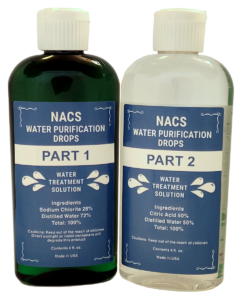
Field Perspective on Chlorine Dioxide
In some circles, chlorine dioxide has been discussed in relation to internal environmental conditions, particularly where there is concern about persistent microbial activity or incomplete resolution.
It is not generally framed, in these discussions, as something that forces the body to respond. Rather, it is often described in terms of how it may influence what remains in the system after an initial response has already begun.
Some individuals report that, when exploring chlorine dioxide in a cautious and measured way, they are paying attention to:
- how quickly their system seems to move from active response toward resolution
- whether congestion begins to feel lighter or less persistent over time
- how their energy returns after the acute phase
- whether recovery feels more complete rather than partial
These are observations, not conclusions.
Different people approach this from different angles, and there is no single pattern that applies to everyone.
Variation in Approach
One thing that becomes clear quickly is that there are many different viewpoints.
Some people take a very structured approach.
Others take a more observational path.
Some focus on timing.
Others focus on environmental factors.
What tends to matter most, from a practical standpoint, is not the method itself, but the awareness brought to the process.
Those who approach cautiously often describe:
- starting with very small exposures
- observing how the body responds before changing anything
- allowing time between adjustments
- paying attention to overall patterns rather than isolated reactions
There is no single “correct” approach that applies universally.
There is, however, a difference between measured observation and forcing outcomes.
Supportive Considerations Often Noted
Alongside any exploration, people frequently mention simple, foundational supports:
- maintaining hydration
- allowing adequate rest
- supporting clear breathing environments
- giving the body time to complete its response
These may seem basic, but they often influence how efficiently the system moves through its phases.
A Note on Perspective
Respiratory conditions can range from mild to serious.
Influenza may pass quickly for some and linger for others.
Pneumonia, in particular, can become severe and should not be taken lightly.
Regardless of the approach someone chooses to explore, it is important to recognize when additional medical evaluation is appropriate.

In working with the body, one begins to see that recovery is rarely about a single action.
It is about how the system moves through a sequence:
- activation
- response
- clearing
- restoration
Some people explore chlorine dioxide within that sequence, not as a replacement for it, but as something they believe may influence the environment in which that sequence unfolds.
The key, as always, is attention.
Not just to what is done, but to how the body responds over time.
Important Note
This material is presented for informational purposes only. Influenza and pneumonia can be serious conditions that require appropriate medical care. Chlorine dioxide is not approved for internal therapeutic use by regulatory agencies. Decisions regarding health should be made in consultation with qualified professionals.