There is little doubt that chlorine dioxide has established itself as an effective broad-spectrum water purification and sanitation compound. Its use in municipal water systems, industrial sanitation, emergency response, food-processing environments, and outdoor water purification has been documented for decades. It is specifically valued because of its ability to reduce a wide range of microorganisms while remaining practical, portable, and highly effective in difficult environments.

Where the conversation becomes far more controversial is when people begin discussing chlorine dioxide beyond environmental purification and into broader biological or health-related applications. Over the years, an enormous number of claims, reports, studies, manufacturer statements, sanitation findings, field observations, and personal testimonials have accumulated surrounding the organisms chlorine dioxide may affect. Some of these claims are grounded in recognized water-treatment science and industrial sanitation research. Others originate from product manufacturers, independent investigators, alternative-health communities, or purely anecdotal user experiences.
One of the biggest mistakes people make when approaching this topic is treating every claim as though it carries the same level of validation. It does not. Some claims are strongly supported within water purification and sanitation contexts. Others remain speculative, controversial, or largely experiential. For that reason, thoughtful due diligence is essential. People should investigate sources carefully, compare viewpoints, distinguish between environmental disinfection and internal therapeutic claims, and avoid both blind belief and automatic dismissal.
What follows is a comprehensive hierarchical list of organisms, conditions, and microbial categories commonly discussed in relation to chlorine dioxide, organized according to the general level of validation or evidence typically associated with the claim—from well-established sanitation applications to highly anecdotal alternative-health discussions.
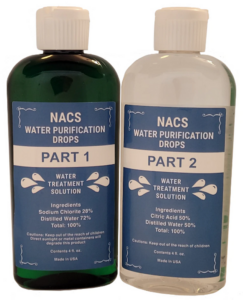
🔷 Chlorine Dioxide Claims Hierarchy
Organisms and Conditions Commonly Discussed in Relation to Chlorine Dioxide
🟩 TIER 1 — DOCUMENTED WATER PURIFICATION / SANITATION TARGETS
(EPA-recognized, industrial sanitation, municipal treatment, or published disinfection relevance)
These are organisms or contamination categories widely associated with chlorine dioxide use in:
- municipal water systems
- industrial sanitation
- emergency water purification
- environmental disinfection
| Organism / Category | Context |
| E. coli | Common waterborne bacteria discussed in municipal purification |
| Salmonella | Food and water sanitation |
| Giardia lamblia | Waterborne protozoan often referenced in outdoor purification |
| Cryptosporidium | Frequently discussed in chlorine dioxide water-treatment contexts |
| Norovirus | Surface and water sanitation discussions |
| Legionella | Water system disinfection |
| Cholera-related organisms | Emergency sanitation and contaminated water control |
| General bacteria & viruses | Municipal and industrial purification applications |
| Biofilm reduction | Industrial water systems and pipeline sanitation |
| Mold and mildew control | Environmental sanitation |
🟨 TIER 2 — MANUFACTURER / INDUSTRIAL EFFICACY CLAIMS
(Claims made in product literature, industrial sanitation, or water-treatment marketing)
These claims are commonly found in:
- water purification product literature
- industrial sanitation materials
- agricultural and environmental applications
| Organism / Category | Discussion Context |
| Campylobacter | Water and food contamination |
| Shigella | Waterborne sanitation |
| Staphylococcus species | Surface sanitation |
| Streptococcus species | General microbial sanitation |
| Pseudomonas aeruginosa | Industrial water systems |
| Candida species | Mold/yeast sanitation discussions |
| Aspergillus | Environmental mold control |
| Algae and slime organisms | Water system maintenance |
| General protozoa | Outdoor water purification |
| Broad-spectrum microbial reduction | Product efficacy positioning |
🟧 TIER 3 — ANECDOTAL / ALTERNATIVE-HEALTH CLAIMS
(User reports, alternative-health discussions, controversial or non-consensus claims)
These are commonly discussed in:
- alternative-health communities
- forums
- anecdotal reports
- independent experimentation circles
These claims remain controversial and are not established medical consensus.
| Organism / Condition | How It Is Discussed |
| Toxoplasma gondii (“cat worms”) | Behavioral, craving, and environmental burden discussions |
| Candida overgrowth | Gut-health and detox conversations |
| Lyme-related organisms | Chronic inflammatory discussions |
| Parasites / helminths | Parasite cleanse communities |
| Liver flukes | Detoxification discussions |
| Mold burden | Environmental toxicity conversations |
| Biofilm-related burden | Chronic microbial discussions |
| Chronic fatigue-related infections | Alternative terrain-health discussions |
| EBV / herpes-family viruses | Immune-load discussions |
| General “microbial burden” | Systems-based detoxification discussions |
🔷 TIER 4 — HIGHLY CONTROVERSIAL OR EXTRAORDINARY CLAIMS
(Stories, testimonials, and claims lacking broad clinical validation)
These claims circulate heavily online but should be approached with substantial caution and critical thinking.
| Condition / Claim Area | Discussion Context |
| Neurocognitive disorders | Dementia / Alzheimer’s anecdotal reports |
| Cancer-related discussions | Extremely controversial |
| Autoimmune conditions | Broad anecdotal claims |
| Advanced chronic illness recovery stories | Testimonial-driven discussions |
| Behavioral and addiction shifts | T. gondii and microbiome speculation |
| Heavy metal “detoxification” | Alternative detox communities |

🔷 Why This Tiered Structure Matters
One of the biggest problems in alternative-health conversations is that: everything gets presented as equal. It is not equal.
Some discussions involve:
- recognized sanitation science
Others involve:
- industrial efficacy claims
Others involve:
- personal testimony and experimentation
Separating these categories helps people:
- think more clearly
- research more effectively
- and avoid exaggerated certainty
🔷 A More Intelligent Approach
The strongest position is rarely: “Everything is true.” Nor: “Everything is false.”
The strongest position is: “Different levels of evidence exist, and thoughtful people should understand the difference.”
That approach protects:
- curiosity
- skepticism
- and intellectual honesty
all at the same time.
🔷 Important Note
This hierarchy is presented for educational and informational purposes only. Inclusion within any tier does not imply medical approval, clinical proof, or consensus regarding internal therapeutic use of chlorine dioxide. Chlorine dioxide is widely used in water purification and sanitation applications. Many alternative-health claims remain anecdotal, controversial, or insufficiently studied.